
Here at the Champaign County Historical Archives, we have yearbooks stretching back into the early twentieth century. Whilst assisting a patron with their research, I came across the 1919 Mahomet Retro yearbook. I flipped through the pages, astonished by the creativity of the eight-person senior class. During the turbulence of the Spanish Flu pandemic, these students still joyously wrote poetry, cracked jokes, drew cartoons, and assembled a remarkably fun yearbook. Let’s explore this century-old relic.
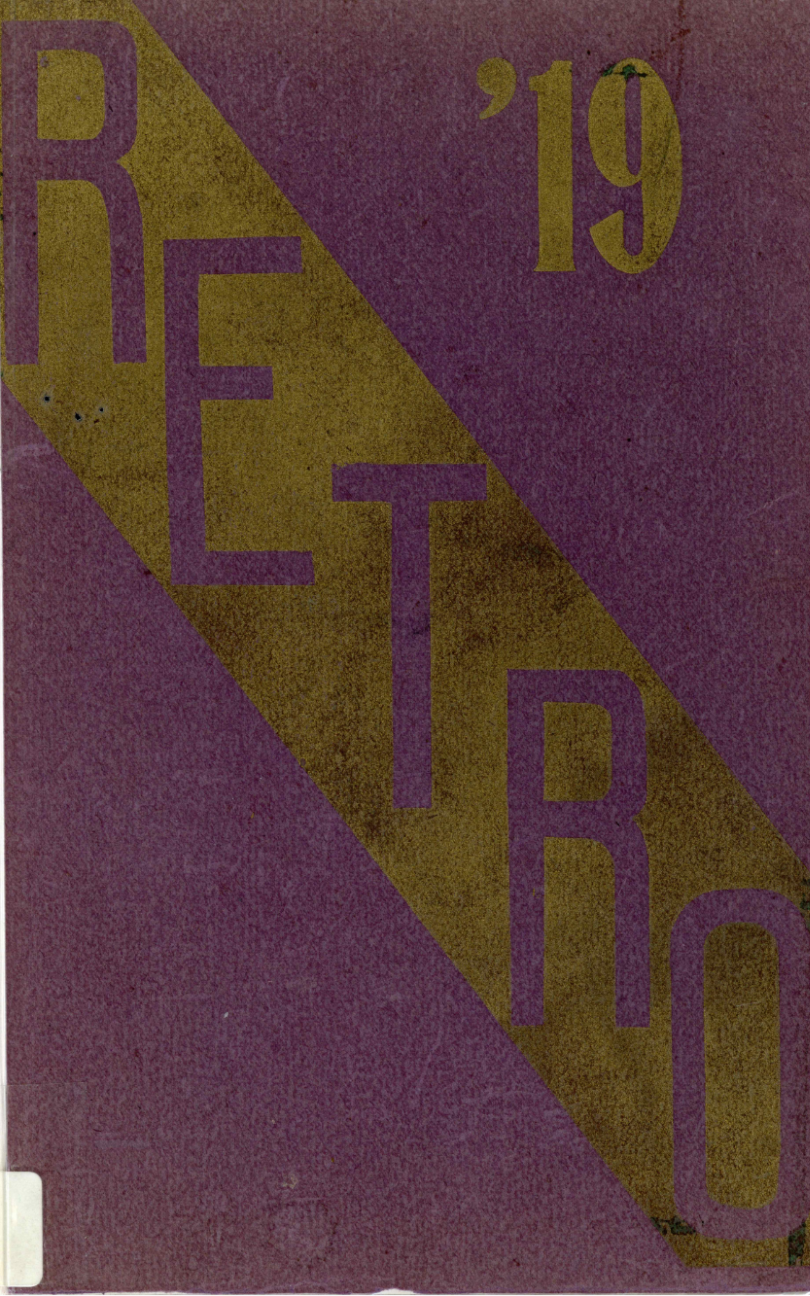
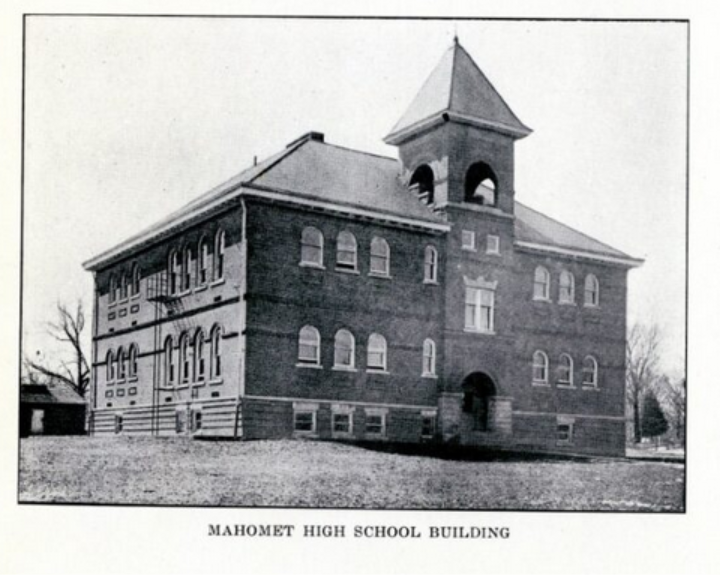
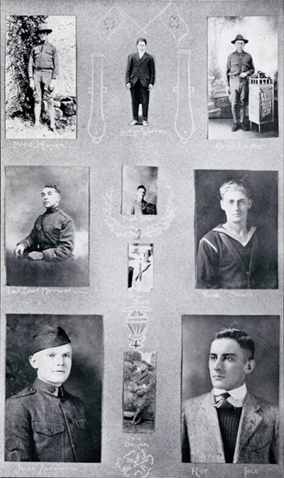
Before diving into the more playful content, it is important to understand the context surrounding the creation of the yearbook. Mahomet High School had been graduating students since the late nineteenth century but was not accredited until 1921 following increased instruction and the construction of a new school building.1 In 1919, the world was in the grips of the lethal influenza pandemic. Students and staff were struck by illness, evidenced by the cancellation of sporting events mentioned in the yearbook. World War I had also just ended, with several alums and community members participating in the fighting. It was a grim period of time, which made the levity and humor of the yearbook even more noticeable.
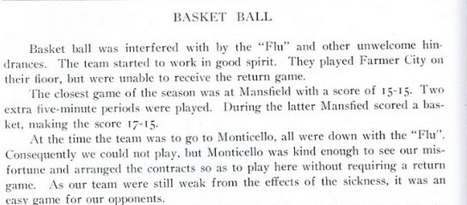
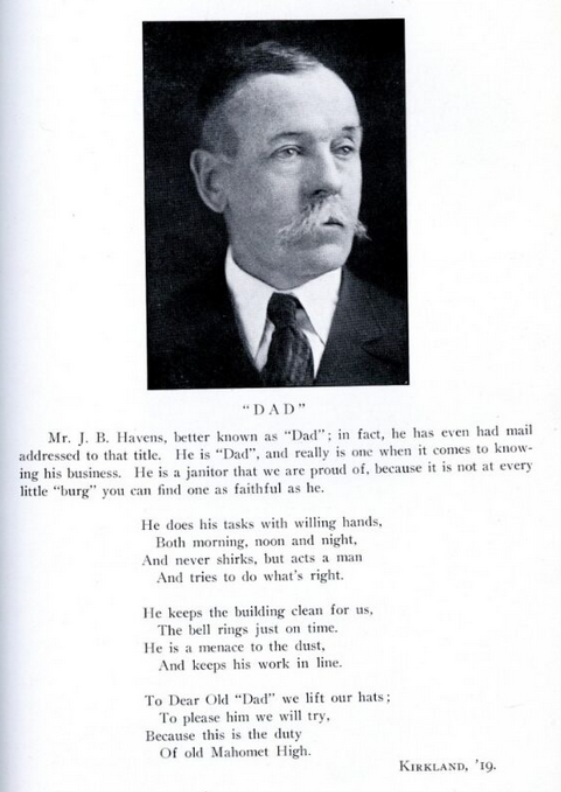
Every member of the 1919 senior class contributed to the yearbook in their own way, but the effort was spearheaded by the editor-in-chief Freda Pike. The staff consisted of three upper-level schoolteachers and a janitor, Mr. J.B. Havens, affectionately referred to as “Dad” by the students. Advertisements for nearby businesses funding the yearbook fill in the final pages of the yearbook. The Retro was a communal effort, requiring participation from every senior student and support from the wider Mahomet community.
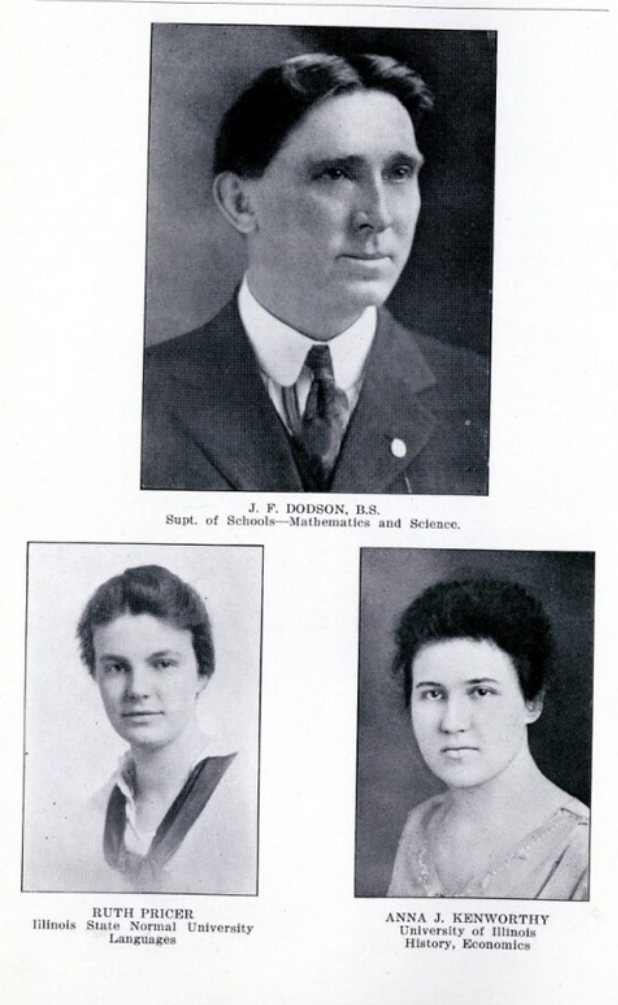
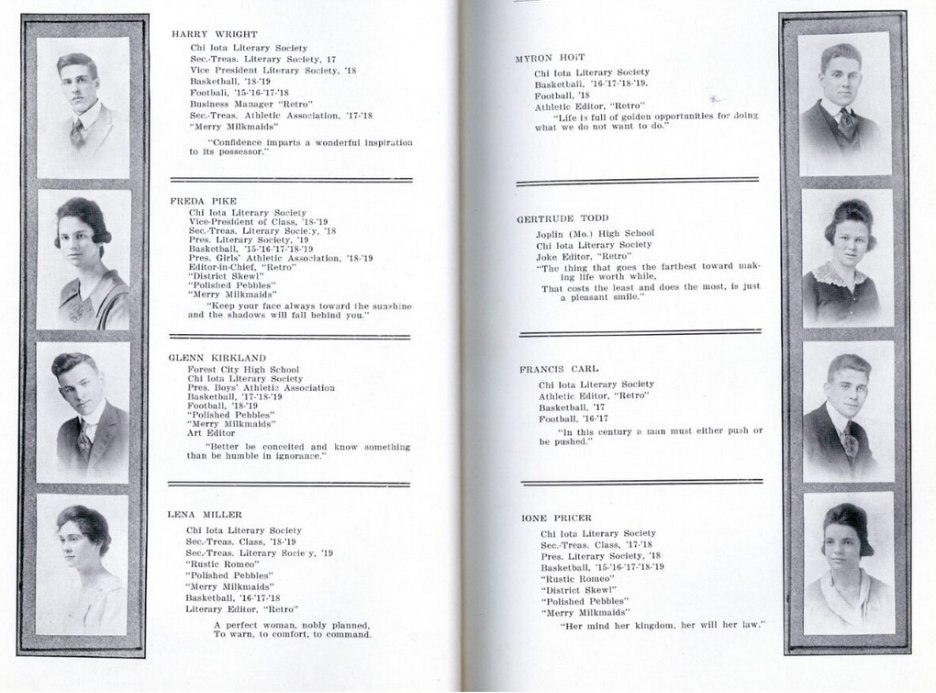
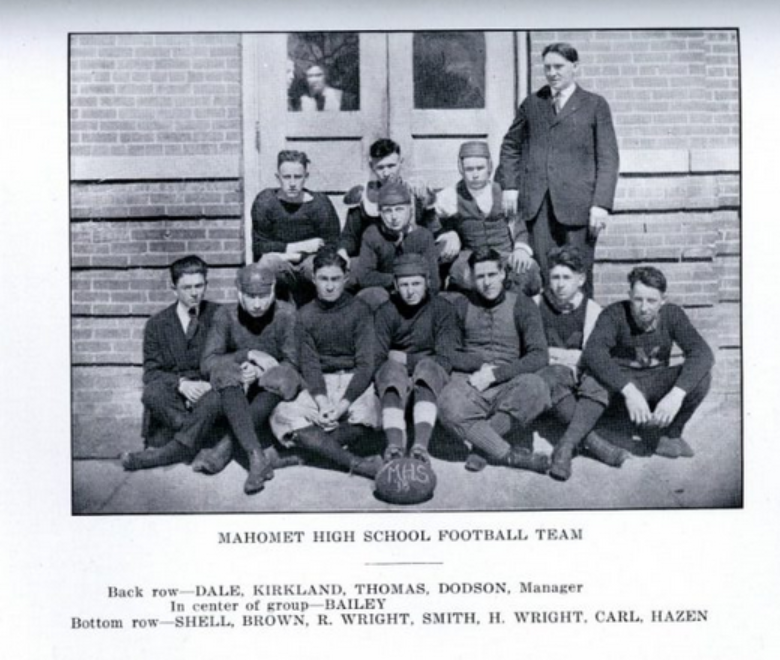
In a departure from modern yearbooks, the 1919 Retro revolves largely around student-created content rather than photographs. While classes and clubs are photographed, many of its pages are solely devoted to text or drawings. Student creativity drives the volume, evident in the poetry, cartoons, jokes, and class fortunes imagined by the senior class. Glenn Kirkland showcases his talent through an affectionate poem dedicated to the school janitor, “Dad,” as well as through his hand-drawn cartoons, which serve as visual dividers between sections. The personality of the students shines through their artwork, and their humor brightens a time of war and sickness.
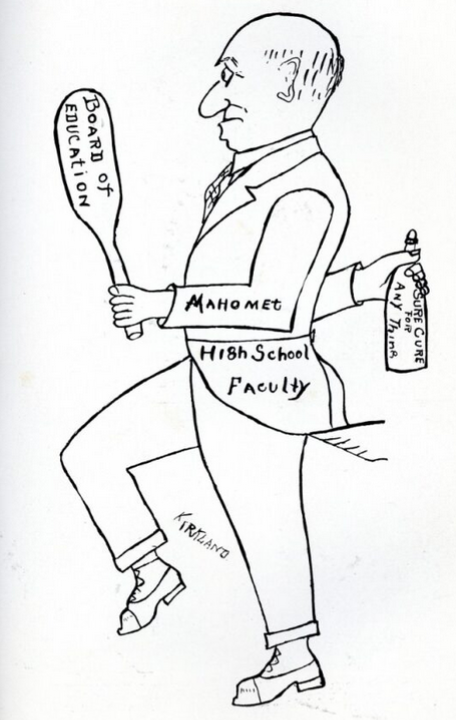
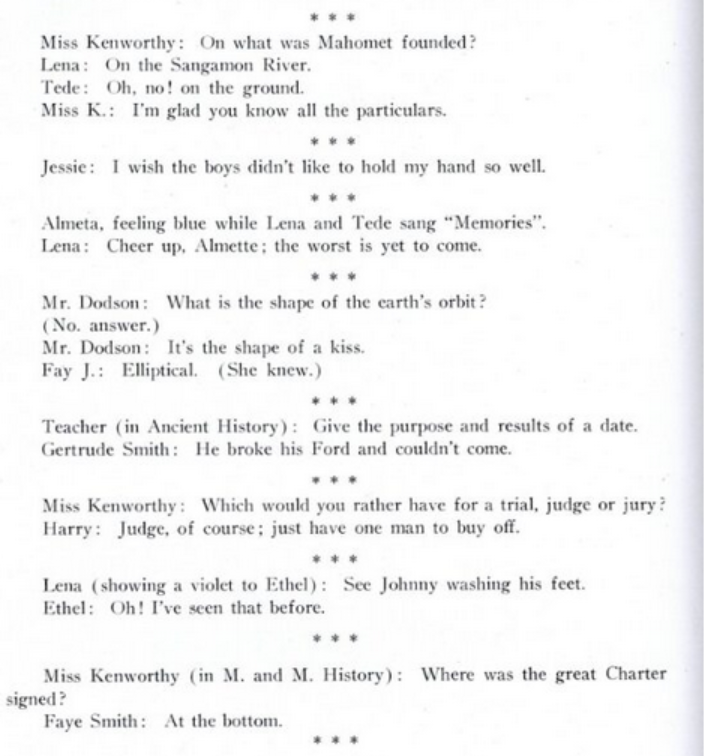
Inside jokes permeate throughout The Retro, with an entire section devoted to recounting the year’s biggest laughs. While many of these jokes may be confusing to a modern audience, they offer a firsthand reflection of the culture and humor of the 1910s. Another revealing feature is the Mahomet High School Chi Iota Literary Society. Even in a small farming community, students placed significant value on reading and writing, sustaining an active club dedicated to literature. Reading through the 1919 Retro is like traveling through time; we can get a glimpse of American life a century ago through the eyes and pens of Mahomet high schoolers.
I never expected to find myself so gripped by a local yearbook, but the creativity, humor, and history captured in the 1919 Retro proved fascinating. Amid a global pandemic and the aftershocks of World War I, these students documented their lives with imagination and joy. A century later, their poems, drawings, and jokes are preserved as historical artifacts in our archives just waiting to be rediscovered.
- Kyle Durango
Archives Apprentice