
My practicum at the Champaign County Historical Archives this past summer gave me experience processing various archival collections and creating finding aids and catalog records for those collections. I’ve learned about local history in Champaign County by reviewing the materials and stories these collections hold, from personal family drama to nationwide news announcements. This practicum has taught me how to use different technologies and search techniques. I gained experience researching with local newspaper microfilm, family files, vertical file records, and other collections in the Archives. My favorite collections that I processed during this practicum were the Lovingfoss-Burr-Dilley Reunion Records (Collection 399), Frank W. Padfield Scrapbook (Collection 398), and the Reginald C. Harmon Collection (Collection 199).
The Lovingfoss-Burr-Dilley Reunion Records includes two handwritten books that contain reunion meeting entries between 1913 and 2003, when the Lovingfoss-Burr-Dilley family would host annual family reunions in Champaign County. Each reunion, the family would elect members to serve in a council to assist with organizing the next reunion, including managing money for lunch, a place to host or meet, news about family members, and someone to take notes on what happened at each reunion. These handwritten entries by the elected secretaries bring to life the events that occurred each year, including births, deaths, marriages, military news, and divorces. These secretaries often invoked humor in their notes, poking fun at other family members or leaving notes about how they lost the reunion meeting book in the back of their closet for a few months. This collection serves as a primary source for life and culture in Champaign County in the 20th century and shows some of the family members’ personalities.
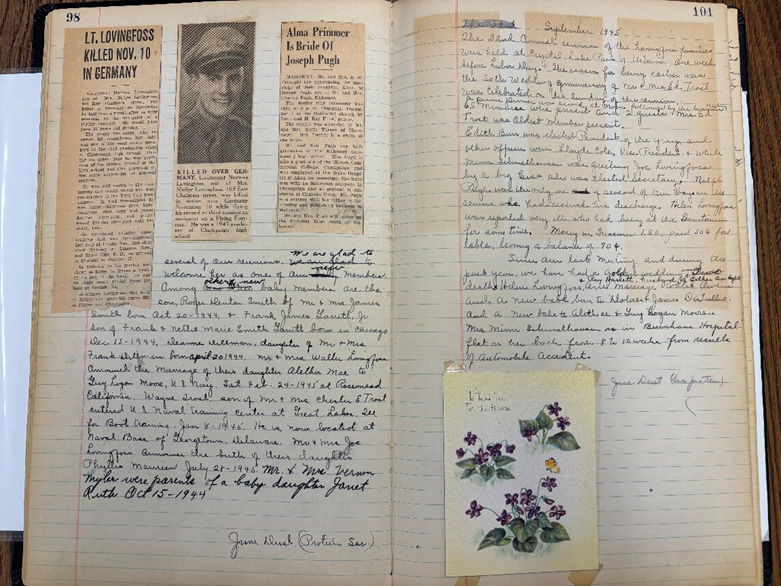
Page 98 in the Lovingfoss-Burr-Dilley Reunion minute book with notes of baby announcements, weddings, and family updates including a clipping announcing the death of Norman Lovingfoss who was killed in Germany during WWII.
The Frank W. Padfield Scrapbook includes pasted sentimental materials from 1902 to 1949. This scrapbook is in fragile condition with many loose materials, and was digitized to provide access so that future physical handling does not cause damage. I really enjoyed processing this collection because of the broad range of materials included, such as postcards, newspaper clippings, photographs, graduation programs, diplomas, handwritten letters, maps, magazines, and even real pressed flowers. The flowers, unfortunately, had to be disposed of to protect the Archives from pest infestation. The creators of this scrapbook collection have brought together items that showcase their life of travel, educational and professional achievements, and love for their family. It allows users to connect with the creators more personally and find deeper meaning in how life was lived in the first half of the 20th century.
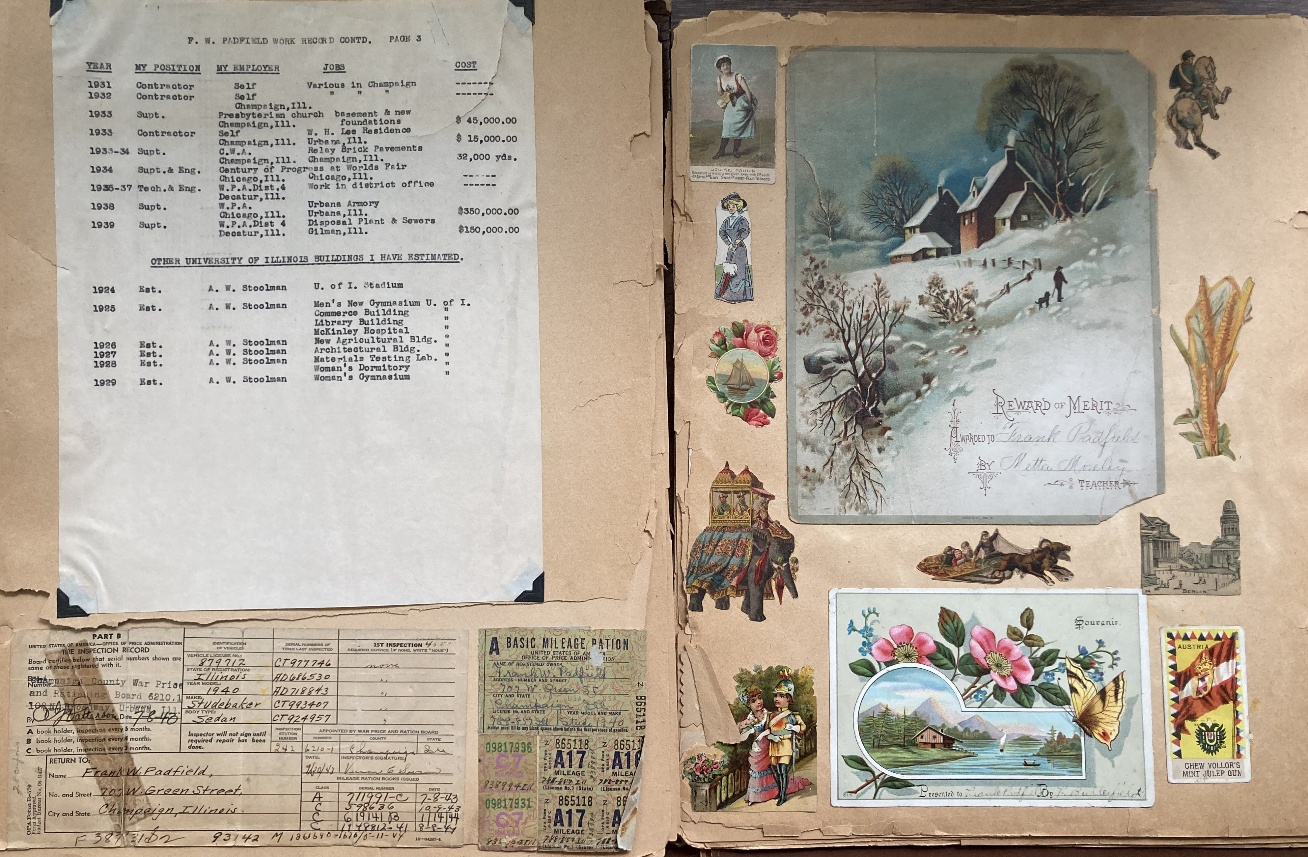
Two-page spread from Padfield Scrapbook featuring typed record for F.W. Padfield (1924-1939), mileage ration coupons, and grade school Rewards of Merit.
The Reginald C. Harmon Collection includes materials and documents from three main areas: Harmon's career as a lawyer, mayor, and military officer; the Harmon family; and local Urbana and Champaign ephemera. This collection allowed me to dive deeply into the life of Urbana's youngest mayor and how he rose to success in politics and the military. Though Reginald C. Harmon was only mayor of Urbana for four years (1929-1933), he gained national recognition in 1931 when he announced a banking moratorium for the city of Urbana to mitigate financial issues during the Great Depression. Closing the banks and reducing economic activity allowed them to rearrange their assets to avoid financial failure for the people of Urbana. In an interview from 1987, Harmon mentioned that he had no idea if this act would work. He said that because it worked, he was considered a hero (Series 2, Folder 10 if users are interested in reading the entire interview), and after Harmon's success in Urbana, other mayors across the country also announced banking holidays to avoid financial failure. Eventually, even President Franklin D. Roosevelt adopted this method. A folder of "Thank You" notes from local businesses and residents is addressed to Harmon in Series 2, Folder 2 of this collection. Reginald C. Harmon lived a long life after his time as mayor of Urbana. This collection allows users to take an in-depth look at a significant figure in Urbana's history and engage with primary source materials in the collection.
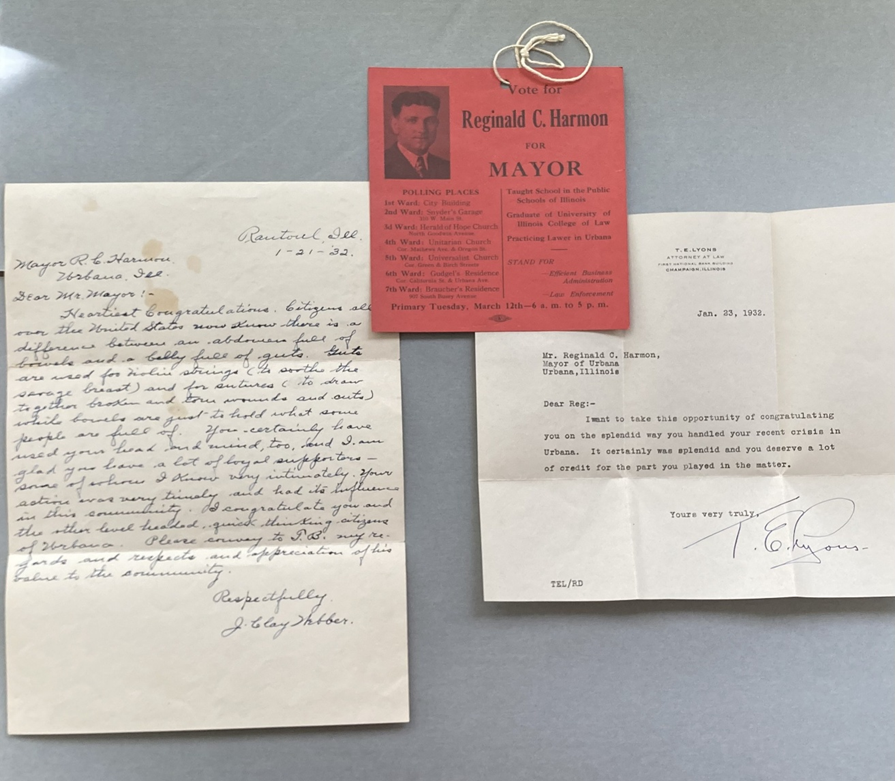
Two thank you notes from Champaign County residents for his handling of the banking crisis.
Working as a practicum student at the Champaign County Historical Archives has allowed me to engage with local history in a way I have not been able to before. I really enjoyed taking the time to organize and understand the materials I surveyed and studied for these collections. Engaging with local history allows visitors to the Archives to have a more extensive understanding of what it means to be a community member, and the Urbana-Champaign area sure has a lot to offer.
- Cassandra Parsons
Archives Practicum Student